
Sell Your House As-Is in South San Gabriel
- Foreclosure, inherited, tenants, damage — we buy it
- Zero fees, zero commissions, zero closing costs
- No obligation — turn the offer down and owe us nothing


No Repairs, No Cleanout, No Inspection Fights
We buy South San Gabriel houses in their current condition — old wiring, unpermitted conversions and all.
“As-is” means something specific in South San Gabriel, an unincorporated 0.83-square-mile pocket of Los Angeles County wedged between Rosemead, San Gabriel, Alhambra and Montebello.
Nearly all of its 2,423 housing units are single-family houses built in the postwar boom that filled in the San Gabriel Valley after World War II, and a house that old almost always carries at least one condition issue that would slow down or block a financed sale.
Selling as-is to Cash Home Buyers CA means we buy the property exactly as it sits, with no repairs, no cleanout and no negotiation over a punch list.
What “As-Is” Actually Covers Here
In a standard California listing, “as-is” in the purchase contract does not mean a buyer cannot ask for repairs — it means the seller is not promising to make any, and the buyer can still walk away or renegotiate after inspection.
That distinction matters in South San Gabriel because the housing stock here is old enough that inspection issues are close to guaranteed: original electrical panels and plumbing that were never updated, roofs original to a postwar build, and foundations that have shifted slightly over 70-plus years on San Gabriel Valley soil.
When we buy as-is, there is no inspection contingency and no repair negotiation at all. The price we offer already accounts for the property’s actual condition.
The Condition Issues We See Most Often
- Unpermitted garage conversions. Turning a garage into a bedroom or a rental unit without pulling a county permit is common across South San Gabriel’s older single-family blocks, and it is one of the fastest ways to stop a lender’s appraisal cold, since that square footage generally cannot be counted as legal living space without permits on file with the Department of Regional Planning.
- Deferred maintenance from long ownership. With 67.1 percent of households owning their home and many owners having held the property for decades, it is common for a house to have gone years without a roof replacement, a re-pipe, or an electrical panel upgrade, simply because the original owner never needed to sell.
- Additions without permits. Small multigenerational households — the average household size here is 3.29 persons, well above the county average — have often added a bedroom or converted a den into living space over the years, sometimes without county sign-off.
- Original postwar systems. Houses built in the years right after World War II frequently still carry original cast-iron or galvanized plumbing and knob-and-tube or early romex wiring that a general inspection will flag immediately.
- Hoarding or heavy accumulation. A house occupied by the same family for 40 or 50 years sometimes needs a full cleanout before it could even be shown to a retail buyer — we buy it exactly as it is, contents included if you want to leave them.
Why a Financed Buyer Struggles With These Issues
A lender’s appraiser working on a South San Gabriel house has to value the property using comparable sales, and because this CDP is small enough that Redfin and Movoto do not track it separately, those comps often get pulled from Rosemead or San Gabriel instead.
An appraiser who spots an unpermitted addition, deferred maintenance, or a garage conversion will typically either require it be resolved before closing or exclude that square footage from the valuation entirely, which can shrink the appraised value below the contract price and force a renegotiation.
None of that applies to a cash sale, since there is no lender and no appraisal contingency standing between an accepted offer and a closed escrow.
County Records, Not City Records
Because South San Gabriel has no city hall, permit history, zoning classification and code enforcement records run through the Los Angeles County Department of Regional Planning and Public Works rather than through a city building department.
We pull those records directly during our review, so you do not need to track down decades-old permits yourself or guess at what was or was not approved.
If a permit was never filed for a conversion or addition, that becomes part of how we price the property, not a reason to delay or decline an offer.
What Selling As-Is Does Not Require From You
You do not need to clean the house, remove old furniture or belongings, fix a leaking roof, replace outdated wiring, or resolve an unpermitted conversion before we make an offer.
You also do not need to stage the property or accommodate showings, since we make our offer after our own walkthrough rather than a series of buyer visits.
If the property is currently rented to a tenant, that does not block an as-is sale either — we buy occupied houses subject to the existing lease just as readily as vacant ones.
And if the house came to you through an inheritance, we work around probate timing rather than asking you to fix the place up first.
South San Gabriel’s Setting Removes a Few Complications
Some as-is condition issues that complicate sales elsewhere in Los Angeles County do not apply here.
South San Gabriel sits on flat San Gabriel Valley ground with no Very High Fire Hazard Severity Zone designation and no coastal zone overlay, so there is no defensible-space requirement or coastal development permit question to sort out.
Its older single-family blocks also carry few if any homeowners’ association rules, so there is typically no HOA resale certificate or architectural-compliance issue standing between you and a closed sale.
What remains is mostly the condition of the structure itself, which is exactly what an as-is cash sale is built to handle.
Why South San Gabriel’s School-District Patchwork Adds Friction for Retail Buyers
South San Gabriel is split across three school districts — Montebello Unified, Garvey, and Alhambra Unified — which is unusual for a community this small and can complicate a retail sale in ways that have nothing to do with the physical house.
A family buyer shopping specifically for a school assignment sometimes passes on an otherwise suitable property once they discover which district a given block falls into, and an agent has to research and disclose that boundary accurately.
Combined with a condition issue like an unpermitted addition, that can meaningfully narrow the pool of financed buyers willing to move forward. None of that factors into our evaluation, since we are not marketing the house to a family choosing a school district.
How the As-Is Sale Actually Works
We look at the property, check county permit and zoning records ourselves, and send a written offer within 24 to 48 hours that reflects the house’s actual condition, permitted square footage included.
Once you accept, we open escrow with a licensed title company and the deed records at the Los Angeles County Registrar-Recorder/County Clerk’s office in Norwalk.
A house with clear title and no tenants typically closes in two to three weeks; a rental or a probate sale usually takes three to six weeks, on whichever date you choose.
The same as-is standard applies to the rest of the city too — see our page on selling as-is across the rest of Los Angeles for the broader comparison.
When Listing As-Is Might Still Make Sense
Not every South San Gabriel house needs a cash sale.
A property with only cosmetic wear and no permit issues, in a neighborhood with strong owner-occupant demand — and this is one, given the 67.1 percent ownership rate and the steady growth in Asian homeownership documented in the 2020 census — can sometimes sell as-is on the open market to a cash buyer or an investor at a price close to what a light-repair retail sale would bring, without our involvement at all.
We would rather tell you that plainly than push a cash offer that does not actually serve you better.
Where the calculation changes is any house with a real structural, permit, or occupancy complication — those are the properties where a retail listing tends to sit longest and where the eventual net proceeds, after price reductions, repair credits and months of extra carrying costs, often land close to what a straightforward cash offer would have paid up front.
We also do not require you to disclose every issue in writing the way a traditional listing agreement does, since our offer is built around our own inspection of the property rather than your disclosures.
That does not mean disclosure law disappears — California still requires honesty about known material defects in any real estate transaction — but it does mean you are not filling out a lengthy Transfer Disclosure Statement item by item the way a retail seller would.
Frequently Asked Questions
Do I need a home inspection before you make an offer?
No. We do our own walkthrough and do not require you to commission an inspection report.
What if the garage was converted without a permit decades ago?
That is common in South San Gabriel and does not stop us from buying. We factor the unpermitted space into our offer rather than requiring it be legalized first.
Can I leave furniture and belongings behind?
Yes. You can leave anything you do not want, and we handle the cleanout after closing.
Will you still buy if the house needs a new roof or re-pipe?
Yes. Major system issues are exactly the kind of condition problem an as-is cash sale is meant to absorb.
Does selling as-is mean I get less money?
Our offer reflects the property’s actual condition rather than a hypothetical repaired value, so it is typically below a fully renovated retail price, but it also comes without repair costs, commissions or carrying costs subtracted afterward.
To get a written as-is offer on your South San Gabriel property, call or text 424-435-2326, or see our South San Gabriel cash-offer process for the full walkthrough from first call to closing.
Seller Guides
Helpful guides for homeowners in South San Gabriel
Plain-English answers to the questions sellers ask us most.
 Relocating
Fontana’s Warehouse Boom: What It Means If You’re Relocating
Fontana grew from a wartime steel town into an Inland Empire logistics hub. See what that shift means for home values and selling if you are relocating.
Read the guide →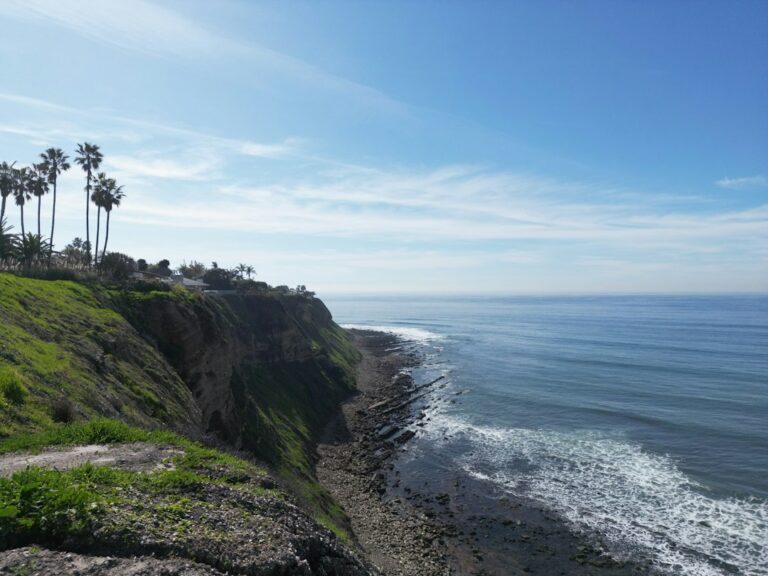 Selling as-is
What Rancho Palos Verdes’ Landslide Zones Mean for a Natural Hazard Disclosure
Rancho Palos Verdes sellers must check a landslide-zone box on the state Natural Hazard Disclosure Statement, separate from the earthquake fault question.
Read the guide → Selling as-is
Highland Park HPOZ Disclosure Rules Explained
Highland Park's historic overlay (HPOZ) governs renovations, but California's TDS and NHD disclosure rules still apply in full, even on an as-is sale.
Read the guide → Selling as-is
As-Is Disclosure Rules for an Older Pasadena, CA Home
Selling as-is in Pasadena doesn't skip California's disclosure law. See what Civil Code requires for the city's century-old Craftsman homes.
Read the guide → Selling as-is
The Anaverde HOA Disclosure Packet an As-Is Sale Still Requires
The Anaverde HOA disclosure packet under Civil Code 4525, plus the TDS and NHD duties an as-is sale in Anaverde, CA never removes, and why it adds time.
Read the guide → Selling as-is
Beverly Hills, CA As-Is Sales: What You Still Disclose
Selling as-is in Beverly Hills, CA doesn't waive disclosure law. See what sellers must still tell buyers under California's TDS and NHD rules.
Read the guide → Selling as-is
Why “As-Is” Doesn’t Simplify Disclosure for a Winnetka, CA Seller
Civil Code 1102 still requires full disclosure on an as-is Winnetka sale -- here's what the TDS, NHD, and lead-paint rules actually require.
Read the guide → Inherited homes & probate
What Probate Looks Like for an Inherited House in South San Gabriel, CA
AB 2016's $750,000 threshold, the $208,850 small-estate figure, and why South San Gabriel's unincorporated status changes who an heir deals with.
Read the guide → Selling as-is
What California’s As-Is Disclosure Law Still Requires in Gardena
Selling as-is in Gardena does not skip California disclosure law. See what sellers must still disclose, plus local zoning and jurisdiction quirks.
Read the guide →