
How Our Mission Hills Cash-Offer Process Works
- Foreclosure, inherited, tenants, damage — we buy it
- Zero fees, zero commissions, zero closing costs
- No obligation — turn the offer down and owe us nothing


Eight Steps, One Written Offer, No Surprises
From first call to wire transfer, here is exactly how a Mission Hills cash sale works.
Every Mission Hills cash offer we make follows the same steps, whether the house is a well-kept ranch near Rinaldi Street or an older rental that has carried the same tenant for a decade. Here is exactly what happens, in order, from the first call to the wire transfer, and where each step tends to move faster or slower depending on the property.
Step 1: You Tell Us About the Property
A short call or an online form gets us the basics: the address, the general condition, whether anyone is living there, and why you are selling. We do not need a formal inspection or an appraisal to get started, and there is no fee or obligation at this stage.
If you already have a recent title report, a copy of a lease, or estate paperwork on hand, sharing it early speeds up several of the steps below, though none of it is required just to start the conversation.
Step 2: We Look at the Property Once
Depending on the property, that means an in-person walkthrough or a review of photos and a short video call, particularly if you have already relocated out of the area.
We are not looking for reasons to lower a number later; we are trying to see the same condition the offer will ultimately be based on, so there are no surprises after you accept.
We look past deferred maintenance, old wiring, and unpermitted work rather than treating any of it as a reason to walk away; those factors change the number, not whether we make an offer at all.
Step 3: We Build the Offer From Real Comps
We pull the closest recent sales we can find, weighted toward the specific street rather than the neighborhood as a whole, since Mission Hills only sees about 23 sales a month and pricing varies block to block.
A house near Rinaldi or Chatsworth Street prices differently than one closer to San Fernando Mission Boulevard or Van Nuys Boulevard, and we adjust for condition, permit status, and whether the property is occupied before landing on a number.
Step 4: A Written Offer Within 24 to 48 Hours
You get a specific number in writing, not a verbal range that shifts later. There is no cost to receive it and no obligation to accept it. If you want to think it over, take the time; the offer does not expire the moment you hang up the phone. We would rather answer follow-up questions than have you accept something you are still unsure about.
Step 5: Opening Escrow
Once you accept, we open escrow with a licensed Los Angeles County title and escrow company. This is also when we order the Department of Building and Safety’s 9A Report of Residential Property Records and the required seismic gas shutoff valve and low-flow fixture certifications, since the 9A report is typically the pacing item on any Los Angeles County closing.
Step 6: Title and Any Occupancy Checks
- Title search. Escrow confirms there are no unexpected liens or ownership issues to clear before closing.
- Rent registration. If the property is occupied and the building’s certificate of occupancy predates October 1, 1978, we confirm Rent Stabilization Ordinance registration status with the city.
- Estate or trust paperwork. For an inherited property, we confirm whether the seller has trustee authority or independent administration authority to sign on the estate’s behalf.
Step 7: Signing
Signing can happen in person or remotely through a mobile notary if you are out of the area, which comes up often given how many Mission Hills sales we handle for sellers who have already relocated.
Multiple heirs or a divorcing couple can sign separately rather than needing to be in the same room at the same time, and we put disbursement instructions in writing ahead of signing whenever proceeds need to be split more than one way.
Step 8: Recording and Funding
The deed records with the Los Angeles County Registrar-Recorder/County Clerk in Norwalk, and your proceeds wire the same day recording is confirmed.
A property with clear title usually records in two to three weeks once the 9A report is back; a rented property or an estate typically takes three to six weeks, largely depending on how quickly the title and occupancy checks in Step 6 clear.
If the property is in foreclosure, we also coordinate directly with the servicer or trustee to confirm the exact payoff figure, so the loan and any recorded liens get paid off from escrow at the same time the deed records.
You pick the specific closing date within whichever window applies, rather than working around a lender’s timeline, and it can move within reason if your own plans change partway through escrow.
Why the Process Looks Slightly Different in Mission Hills
Mission Hills sits within zip code 91345, bordered by Granada Hills, Sylmar, San Fernando, Pacoima, Arleta, and Panorama City, with the Ronald Reagan Freeway, SR-118, running through the middle of the neighborhood.
Most of the housing was built between the 1940s and the 1970s along streets like Woodman Avenue, Brand Boulevard, and Devonshire Street, and with the neighborhood seeing only around 23 sales a month, there are fewer recent comps to pull from on any given street than in a busier part of the Valley.
That is part of why Step 3 leans on the closest possible comps rather than a neighborhood-wide average, and why a house closer to Rinaldi Street can price noticeably differently than one near San Fernando Mission Boulevard even though both are technically in Mission Hills.
Houses closest to the freeway or the San Fernando Mission Cemetery occasionally carry easement or setback questions that come up during the title search in Step 6, and a handful of parcels near San Fernando Mission Boulevard have commercial-adjacent zoning that our team reviews as part of building the offer in Step 3.
Neither situation changes the basic process; it just means we look a little closer at the specific parcel before finalizing the number.
A property that has been a rental for years, common along Van Nuys Boulevard and in the smaller apartment buildings scattered through the neighborhood, adds the rent-registration check described in Step 6 but otherwise moves through the same eight steps as a vacant house would.
What Never Shows Up on Your Closing Statement
There is no agent commission, which on the neighborhood’s $787,000 August 2026 median would otherwise run roughly $39,000 to $47,000 at 5 to 6 percent. There is no repair credit negotiation, no staging cost, and no fee to request or receive an offer whether you accept it or not.
The one cost that does apply either way is the combined city and county transfer tax of $5.60 per $1,000, or about $4,400 on that same median, which is a standard closing cost on any Los Angeles County sale, cash or financed.
Frequently Asked Questions
How long does the whole process take from first call to closing?
Often 2 to 3 weeks for a property with clear title, 3 to 6 weeks for a rented property or an estate, though you set the exact date.
Is there any cost to get an offer?
No. There is never a fee to request or receive a written offer.
What if the walkthrough turns up something you didn’t expect?
We build the number around what we actually see, so there is no separate renegotiation step after you have already accepted.
Can I sign remotely if I’ve already moved out of the area?
Yes, through a mobile notary, which we use regularly for Mission Hills sellers who have relocated.
Who orders the 9A report?
We do, along with the required retrofit certifications, as part of opening escrow.
Do you use different comps for different parts of Mission Hills?
Yes. We weight toward the closest recent sales to your specific street rather than a flat neighborhood average.
For the same process across the rest of the city, see our page on the Los Angeles cash-offer process. To start with your own Mission Hills property, call or text 424-435-2326.
Seller Guides
Helpful guides for homeowners in Mission Hills
Plain-English answers to the questions sellers ask us most.
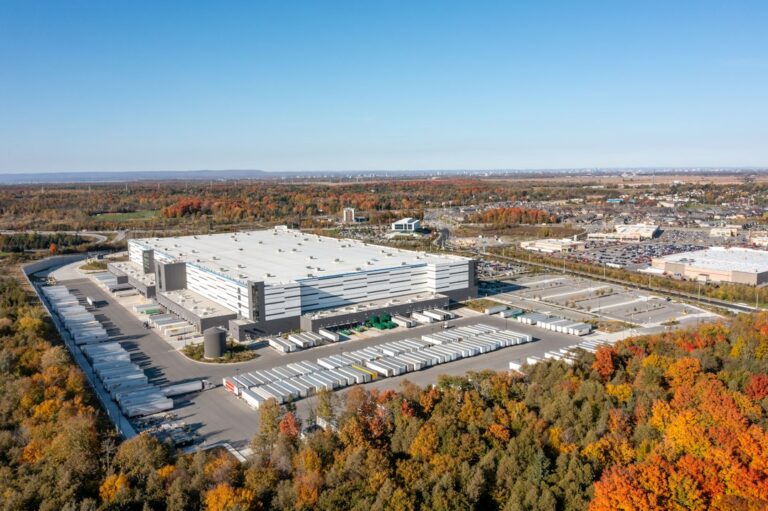 Relocating
Fontana’s Warehouse Boom: What It Means If You’re Relocating
Fontana grew from a wartime steel town into an Inland Empire logistics hub. See what that shift means for home values and selling if you are relocating.
Read the guide → Selling for cash
The Transfer Tax Every Los Angeles Seller Pays, With or Without Measure ULA
Los Angeles charges its own $4.50-per-$1,000 tax on top of the county rate, before Measure ULA applies. See the exact combined math at closing.
Read the guide → Rentals & tenants
How Much Must Long Beach Landlords Pay Tenants Under the Relocation Ordinance?
Long Beach landlords: see the LBMC 8.99 relocation payments, notice periods, and city filing step required before a no-fault tenant termination.
Read the guide → Selling for cash
What Inglewood’s Housing Protection Ordinance Requires Before You Sell a Rental
Inglewood's Housing Protection Ordinance covers more rentals than expected, with rent caps, just-cause rules, and relocation tiers that transfer at sale.
Read the guide → Selling for cash
The Five-Year Countdown Before Los Angeles County Auctions a Tax-Defaulted Home
LA County auctions tax-defaulted homes after five years unpaid. See the redemption deadline, installment options, and how to claim excess proceeds.
Read the guide → Selling for cash
What Beverly Hills’ Rent Stabilization Ordinance Requires Before You Sell
Beverly Hills runs its own BHMC Chapter 5 and 6 rent rules: caps, BHRent registration, just-cause grounds and relocation fees sellers must clear first.
Read the guide → Selling as-is
What Rancho Palos Verdes’ Landslide Zones Mean for a Natural Hazard Disclosure
Rancho Palos Verdes sellers must check a landslide-zone box on the state Natural Hazard Disclosure Statement, separate from the earthquake fault question.
Read the guide → Selling for cash
West Hollywood’s Rent Stabilization Ordinance: What a Seller With Tenants Must Clear First
West Hollywood's rent stabilization law sets strict just-cause rules and relocation fees before you can sell a tenant-occupied rental unit here.
Read the guide → Inherited homes & probate
Partition Actions Between Heirs: How California Law Forces a House Sale
California heirs can force a house sale through a partition action under CCP 872-874, with court referees, confirmation hearings, and buyout rights.
Read the guide →